Biomass, Biogas, Landfill Gas to Energy (LFGTE) & Renewable Natural Gas (RNG)
January 6, 2026
Ameresco and Republic Services Bring 5.2 MWe Upper Rock Landfill Gas-to-Renewable Natural Gas Facility Online

Share this post
As one of America’s oldest cities, Philadelphia’s infrastructure varies widely by neighborhood, with lower-income areas facing the greatest challenges. Many of these neighborhoods were disproportionately impacted by poor lighting and frequent outages, which contributed to higher rates of nighttime crime.
For cities across the country, aging infrastructure presents a mounting challenge. Outdated lighting systems consume excessive energy, generate high maintenance costs, and fall short of meeting modern standards for public safety. As of 2018, about 51% of outdoor lighting had been converted to LEDs in the US, but many cities still operate outdated high-pressure sodium (HPS) or incandescent systems. The transition is accelerating but remains incomplete.
In Philadelphia, more than 130,000 HPS streetlights illuminated the city for years, but they came with a heavy price: high energy bills, frequent outages, inefficient maintenance practices, and dim nighttime conditions that contributed to traffic incidents and public safety concerns.
The Philadelphia Streetlight Improvement Project (PSIP) was born out of this challenge. Launched in 2023 by the City of Philadelphia in partnership with the Philadelphia Energy Authority (PEA), Acuity Brand’s American Electric Lighting, and Ameresco, PSIP represents the largest energy conservation project in the city’s history.
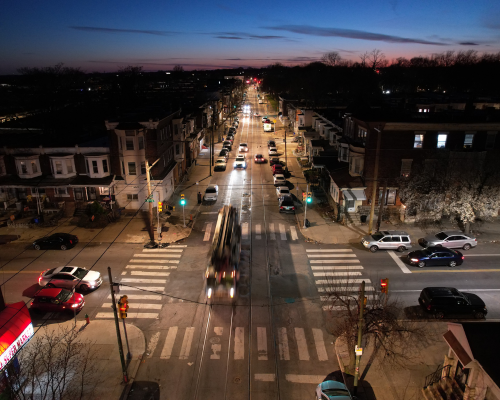
The PSIP was intentionally designed to prioritize installations in underserved neighborhoods. Using a data-driven approach that incorporated crime data, traffic crash data, and social equity indicators, the project ensures lighting upgrades provide the greatest benefits where they are most needed. Early research from the University of Pennsylvania’s Crime and Justice Policy Lab has already linked the new lighting to reductions in nighttime crime, underscoring the public safety impact of energy efficiency.
While this project reflects Philadelphia’s distinct needs, the underlying model—public-private collaboration, data-driven prioritization, and integration of smart, energy-efficient technologies—is highly scalable. Cities nationwide can replicate this approach to meet their own safety, resiliency, and sustainability objectives.
The Philadelphia Streetlight Improvement Project
At its core, the project is replacing 130,000 outdated HPS fixtures with modern, energy-efficient LED fixtures equipped with remote monitoring and smart controls. These advanced upgrades deliver immediate financial savings, dramatically reduce energy consumption, and enhance nighttime visibility across every neighborhood. With dimmable, Dark Sky compliant fixtures and real-time remote sensing capabilities, the system gives city managers the ability to optimize energy use, tailor lighting output to community needs, and quickly respond to outages —creating a safer, more resilient, and sustainable urban environment.
As the energy solutions partner leading design, engineering, and implementation, Ameresco worked hand-in-hand with Philadelphia officials to ensure the project met technical, environmental, and community goals. Ameresco coordinated with local community organizations, surveyed residents across 15 trial sites, and incorporated feedback into the citywide design. The project also created meaningful workforce opportunities: residents were hired to support audits, assembly, installation, and maintenance, while more than 80% of contracts went to minority-, women-, and local business enterprises.
Philadelphia has also set ambitious energy and resiliency targets. By 2030, the city aims to cut municipal energy use by 20% and reduce carbon emissions by at least 50%. Outdated streetlighting, which is often responsible for a sizable share of municipal energy consumption in major cities across the country, stood as a barrier to those goals. Ameresco’s experience with large-scale efficiency projects ensured PSIP was a comprehensive solution aligned with Philadelphia’s long-term sustainability and equity priorities.
Change Across the City
As of August 2025, more than 100,000 LED streetlights have been installed, marking 78% completion toward the 130,000-fixture goal. Already, the city is realizing measurable benefits:
Broadening the Impact; Beyond Philly
Philadelphia’s streetlighting transformation demonstrates that energy efficiency is a catalyst for urban progress. By modernizing infrastructure and adopting smart technologies, cities like Philadelphia can achieve substantial cost savings, lower carbon emissions, and build greater resilience against outages and other challenges. Most importantly, these improvements directly enhance the daily lives of residents—making neighborhoods safer, more vibrant, and better equipped for the future.
PSIP demonstrates that large-scale efficiency initiatives can serve as multipurpose tools: advancing decarbonization, supporting public safety, driving workforce development, and laying the groundwork for smart-city technologies like IoT sensors and data collection. Ameresco is already working on similar projects across the country.
As municipalities across the U.S. grapple with aging infrastructure, rising energy costs, and growing climate commitments, Philadelphia’s approach offers a scalable model that is lighting the way to a brighter future. By leveraging public-private partnerships and integrating efficiency into core infrastructure, cities can make small changes add up to a significant impact. Let’s work together to ensure that the other 49% of our public lighting is updated so every community can enjoy safer, more sustainable streets.
This free resource provides a tangible roadmap for organizations looking to reduce their carbon footprint and achieve net zero emissions. The built environment is responsible for roughly 40% of energy-related carbon emissions. This resource offers a holistic approach to cutting consumption, costs, and carbon and practical solutions for facility owners and operators.

